
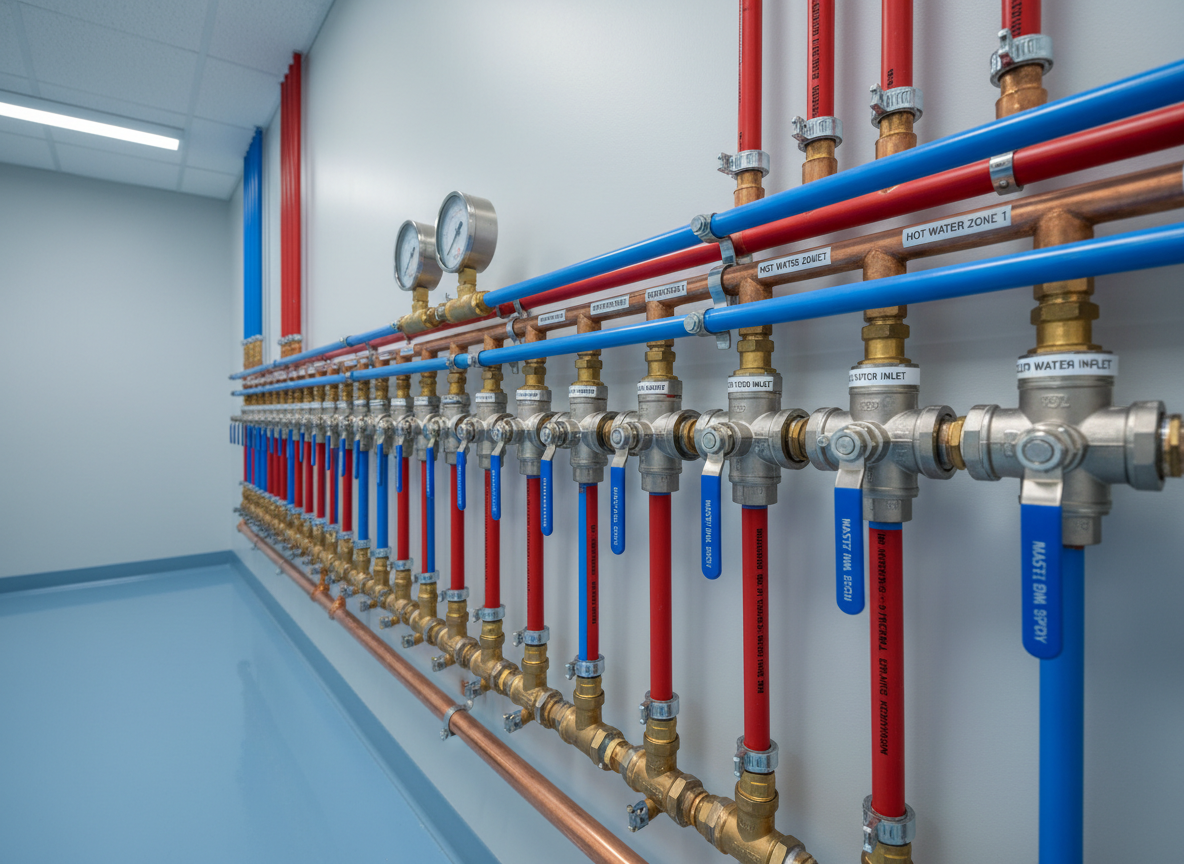
There’s a small tank hanging off your boiler that most homeowners have never noticed — until the pressure relief valve starts dripping and nobody knows why. Meet the expansion tank: one of the cheapest components in your heating system, and one of the most important.
What it does
Water expands when it’s heated. In a closed hydronic system, that expansion has to go somewhere. The expansion tank is a small pressurized vessel with an internal air bladder that absorbs the pressure increase every time your boiler fires. Without it, pressure would spike with every heating cycle.
How it fails — and the telltale sign
Over time, the internal bladder wears out and the tank becomes waterlogged — it can no longer absorb expansion. The pressure has to escape somewhere, so your pressure relief valve starts leaking or dripping. That drip is a warning, not a nuisance: the valve is doing its job because something upstream failed. Never cap or disable a relief valve.
Other signs: boiler pressure spiking above the normal 12–20 PSI range, or a tank that feels heavy when tapped (a healthy one sounds hollow on the air side).
The smart play: replace it proactively
Expansion tanks last roughly 5–10 years — much shorter than the boiler itself. Because they’re inexpensive, the smart move is replacing proactively: at any major boiler service after year 7, and always when a boiler is replaced. It’s cheap insurance against pressure problems that can stress every other component in the system.
Relief valve dripping, or boiler pressure acting strange? Call 3R Plumbing & Mechanical at (781) 974-5239. It’s usually a quick, affordable fix — and catching it early protects the expensive parts.