
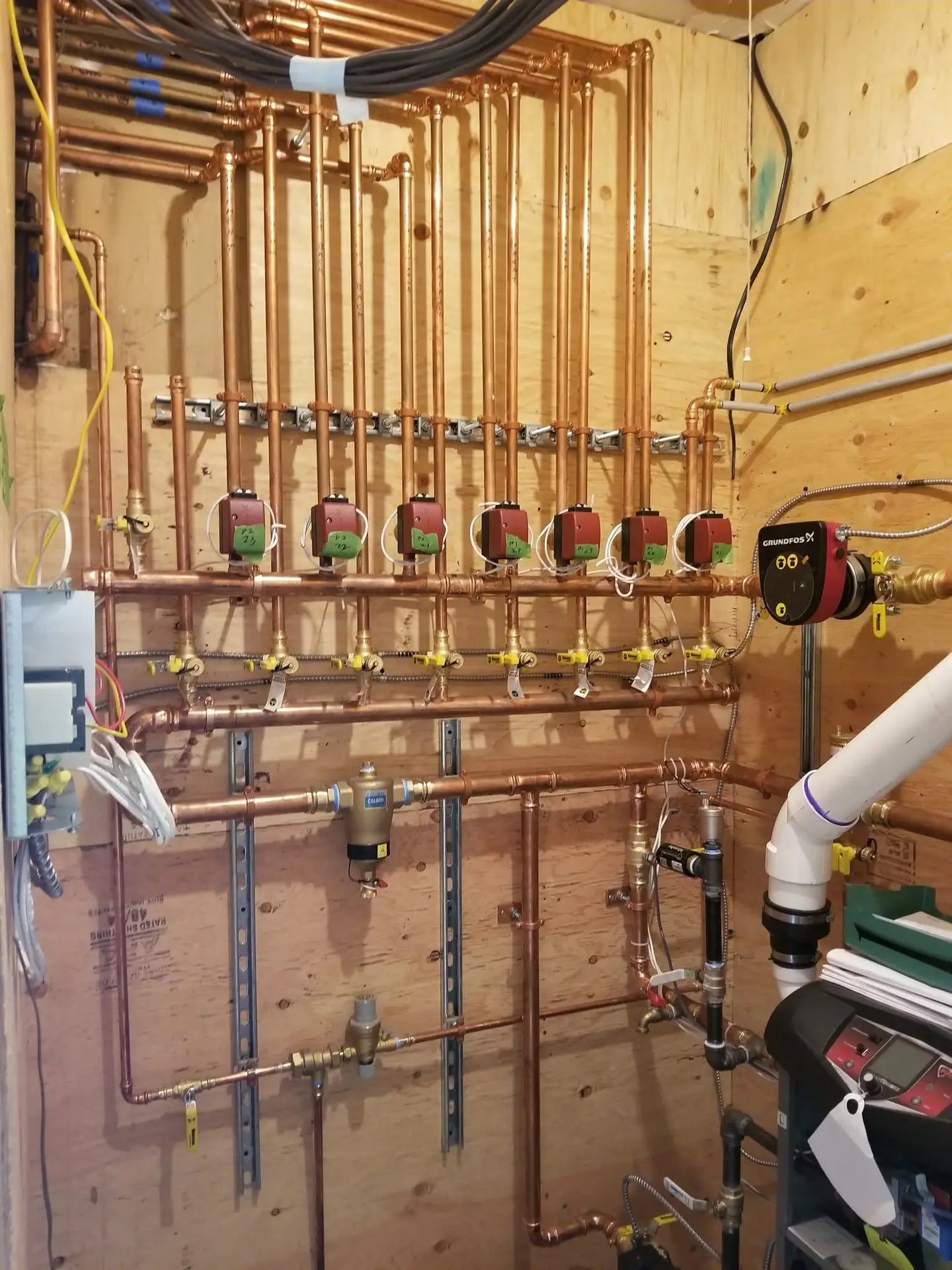
Air is the enemy of a hot water heating system. It collects at the high points, blocks the flow of hot water, and leaves rooms cold even when the boiler is working fine. Bleeding the air out is one of the few heating jobs most homeowners can do themselves, as long as you know which kind of system you have.
First: is it hot water or steam?
This matters. Hot water systems have a pressure gauge on the boiler and usually a circulator pump. The radiators have a small square or slotted bleed valve near the top on one side. Steam systems have a sight glass on the boiler showing a water level, and each radiator has a larger air vent, often shaped like a bullet or a can, that hisses as the system heats.
Do not try to bleed a steam radiator with a key or by loosening the vent. Steam vents let air out on their own. If a steam radiator will not heat, the vent may be clogged or the piping may need adjusting, and that is a job for a technician.
Signs your hot water radiators need bleeding
- The top of the radiator is cold while the bottom is warm
- Gurgling, trickling or sloshing sounds in the pipes
- One or two rooms (often upstairs) never quite get warm
- The system was recently drained or worked on
How to bleed a hot water radiator
- Turn the thermostat down and let the system cool for at least an hour. Water in a running system is hot enough to burn.
- Start on the lowest floor at the radiator farthest from the boiler, and work your way up and toward the boiler.
- Hold a rag and a small cup under the bleed valve. Turn it slowly counterclockwise with a radiator key or flat screwdriver, about a quarter turn.
- You will hear air hiss. When a steady stream of water comes out with no sputtering, close the valve snugly. Do not overtighten it.
- Repeat on each radiator.
- Go back to the boiler and check the pressure gauge. Bleeding drops the pressure. If it now reads below about 12 psi cold, the system needs water added. Many boilers have an automatic fill valve. If yours does not, or you are not sure, call us rather than guessing.
If the air keeps coming back
Bleeding once or twice a season is normal. If you are bleeding the same radiators every week, something is letting air in or making it: a small leak, a failing automatic air vent, a bad fill valve, or a system without a proper air separator. Fixing the cause is usually a simple repair that makes the whole system quieter and more even.

Still cold after bleeding?
Let us find out why
Uneven heat can come from air, a weak circulator, a stuck zone valve or a boiler that is not set up right. We diagnose hot water and steam systems every day.
Book boiler serviceCall 3R Plumbing & Mechanical at (781) 974-5239 if your radiators or baseboard are still not heating evenly.