
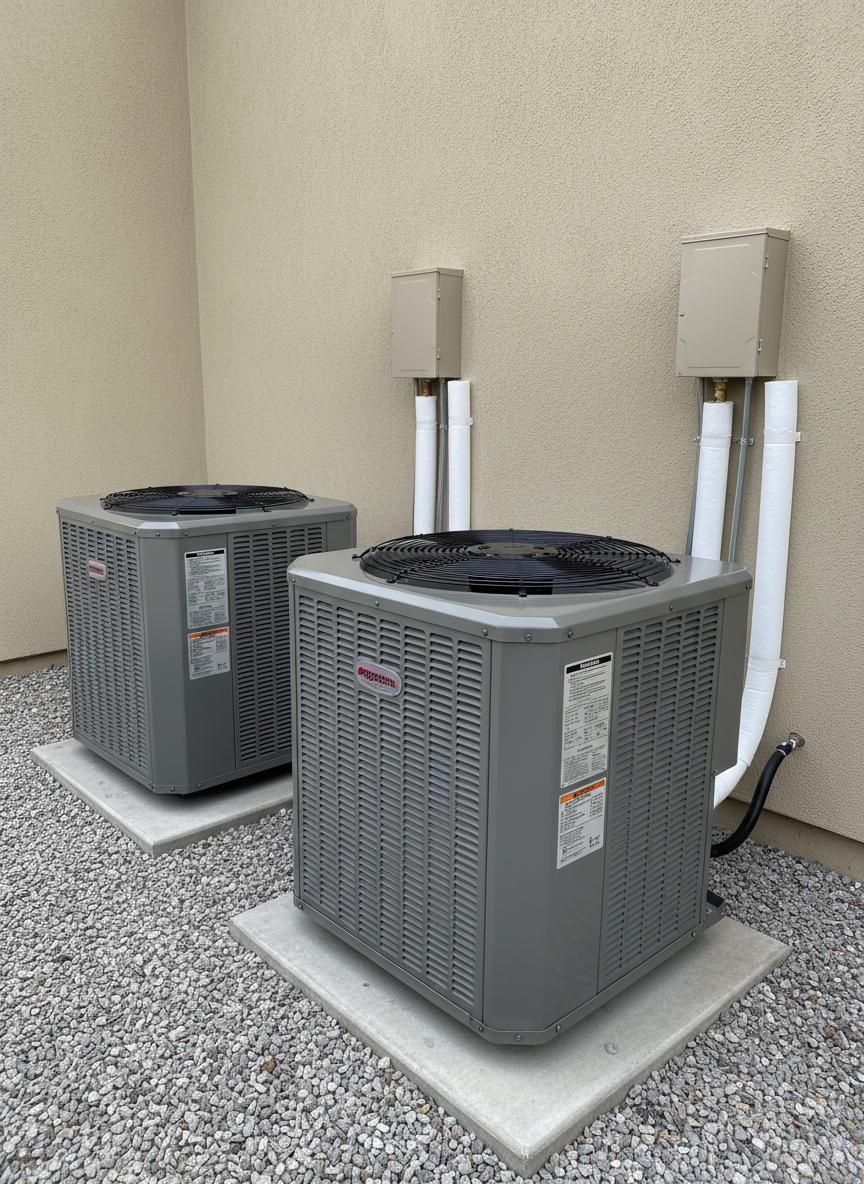
Not ready to go all-in on a heat pump, but tired of feeding an oil or gas system all winter? There’s a middle path a lot of South Shore homeowners don’t know exists: dual fuel heating.
How it works
Dual fuel means your home uses two heat sources: a heat pump handles most of the heating season, and your existing gas or oil system kicks in as backup when outdoor temperatures drop below a setpoint — usually around 25–30°F. The changeover is automatic; you set the thermostat and forget it.
Why it makes sense here
- Maximum efficiency where it counts. The heat pump covers the 80%+ of the season when it’s most efficient, cutting fuel consumption dramatically.
- Backup for the brutal stretches. Your existing system carries the coldest nights, so there’s zero comfort compromise.
- You get central A/C in the deal. Every heat pump cools in summer — for homes without central air, that’s a huge bonus.
- Lower upfront cost. You keep your existing boiler or furnace instead of replacing everything at once.
- Rebate-eligible. Dual fuel setups qualify for partial-home Mass Save rebates — $1,125 per ton in 2026, up to $8,500.
Who it’s right for
Dual fuel is a great fit if you have a working gas or oil system with years of life left, want to slash fuel usage without a full conversion, or want to add cooling at the same time. If your existing system is near end-of-life anyway, a full whole-home heat pump conversion (with the larger $2,650/ton rebate) may be the better move — we’ll run both numbers for you.
Curious what dual fuel would look like in your home? Call 3R Plumbing & Mechanical at (781) 974-5239. As a Mitsubishi Diamond Contractor, we design these systems all over the South Shore — and we’ll give you an honest read on whether it beats a full conversion for your house.